 Stuart Kerr Spindlow
Use asynchronous communication for updates and decisions that benefit from a durable record and do not require an immediate conversation. Give each message a purpose, an owner and a clear response expectation. Once a decision is accepted, connect it to the requirement or work item it changes so the team does not have to reconstruct intent from a chat history.

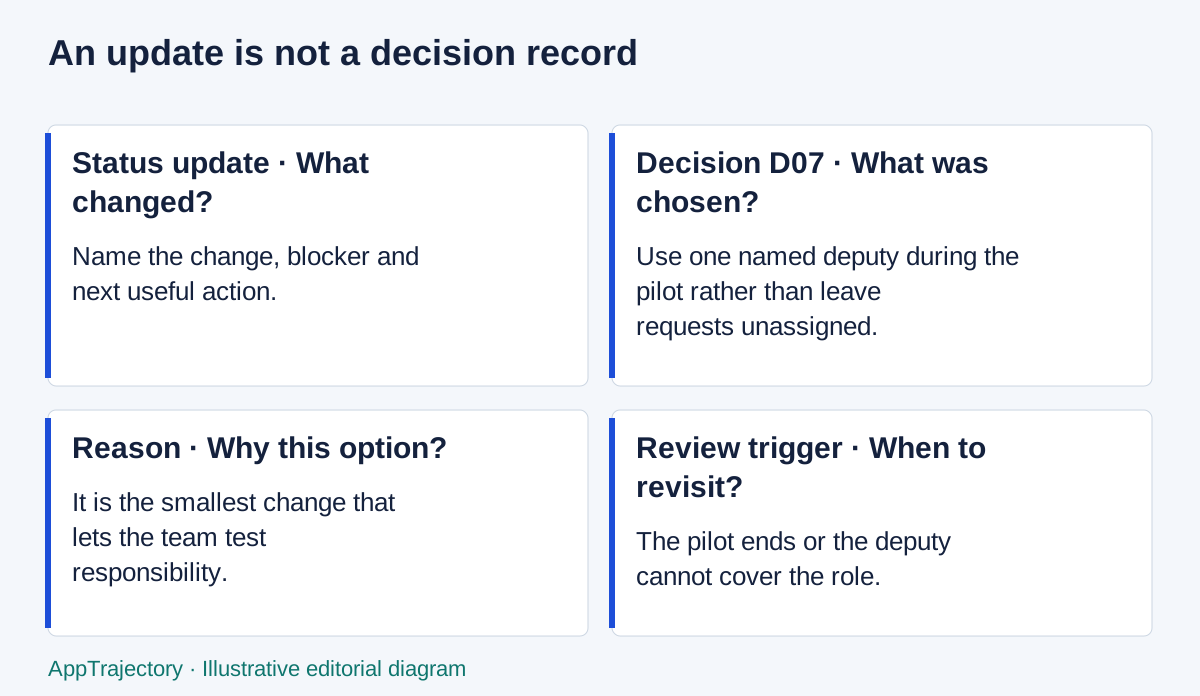
Read the diagram as text
- Status update · What changed?: Name the change, blocker and next useful action.
- Decision D07 · What was chosen?: Use one named deputy during the pilot rather than leave requests unassigned.
- Reason · Why this option?: It is the smallest change that lets the team test responsibility.
- Review trigger · When to revisit?: The pilot ends or the deputy cannot cover the role.
Choose the right place for the conversation
A status update belongs where the team expects to find current progress. A consequential decision belongs in a stable record that can be linked from delivery work. A brief question may fit in chat, but a chat reaction should not silently authorise a scope change. Decide which person can accept the change and where that acceptance is recorded.
Synchronous discussion is useful when people interpret the problem differently, a sensitive issue needs care or a blocker is urgent. After the conversation, write down the decision and unresolved questions. The meeting does not replace the record. Equally, do not schedule a meeting simply because a written update has no stated question or response deadline.
For a small team, one shared document and a concise work list can provide enough structure. Adding another communication application is justified only when the current tools prevent a needed behaviour, such as access separation or reliable retrieval.
Write an update that invites the right response
Update: client-request intake pilot
Owner: coordinator (illustrative role)
Since the last update: trialled request assignment with approved sample records.
Observed: the assigned owner can identify the request; absence handling is unresolved.
Next: test the fallback owner before adding reminders.
Decision needed: who may reassign a request when the owner is away?
Requested from: delivery lead.
Respond by: [agreed time and timezone].
If no response: retain current scope and escalate using the agreed channel.
Evidence: link to the task notes, with sensitive data kept in the approved workspace.
The placeholder time is for your team to choose, not a universal service standard. Include a timezone when colleagues work in different regions. “Please review” is incomplete unless the reader knows what decision is required and what happens if they cannot respond.
Label observations, assumptions and estimates separately. “The reminder will reduce delays” is an assumption. “The pilot participant missed the reminder under these conditions” is an observed result with a limited scope. A supplier’s claim about notification reliability should remain a claim until an appropriate check supports it.
Keep decisions close to the work
| Field | Example |
|---|---|
| Decision ID | D07: approve a fallback owner for new requests |
| Problem | Incoming work may remain unassigned during absence |
| Options | Wait for the usual owner; nominate a deputy; create a rotating queue |
| Decision | Use one named deputy for the pilot |
| Reason | Smallest change that allows the team to test responsibility |
| Evidence | Pilot handoff notes; no measured long-term result |
| Accepted by | Delivery lead, once acceptance is actually recorded |
| Affected work | Requirement R04 and the assignment acceptance criteria |
| Review trigger | Pilot ends or the deputy cannot cover the role |
Keep the record concise enough to read during delivery. Link to background discussion if necessary, but include the actual conclusion in the record itself. A link to a long thread without a summary transfers the burden of interpretation to the next reader.
Do not overwrite a decision when new evidence changes it. Add a superseding decision, describe the reason and link both records. This preserves context without requiring anyone to defend an outdated approach.
Turn an accepted change into work
Illustrative change request: a client asks to receive a notification whenever any colleague comments. The team’s original requirement only covers a completion message. The coordinator records the request and asks the delivery lead whether it belongs in the current pilot. Until accepted, it remains a proposal.
If accepted, update the requirement and acceptance criteria, assess access and notification consequences, and reconsider the backlog order. A comment may contain internal information that should not be sent to a client. “Notify on every comment” therefore creates a visibility decision, not merely an extra checkbox.
If deferred, tell the requester what was decided and why. Silence is ambiguous: they may assume the request was accepted while the team assumes it was parked. Clear refusal or deferral can prevent more friction than an enthusiastic but unowned acknowledgement.
Make escalation operational
Blocker: client-role account can see an unrelated sample record.
Impact: the essential visibility gate is not met.
Immediate action: stop that pilot workflow and avoid adding real client data.
Decision required: correct configuration and repeat the test, or reject the option.
Owner: access owner, with the pilot lead informed.
Escalation: use the team’s agreed urgent channel; do not wait for routine review.
Record: conditions, roles and observed result, without copying sensitive content.
Choose response expectations according to consequence. A routine wording suggestion can wait for the next review; an access boundary failure may require immediate attention. Do not make every message urgent or expect colleagues in other timezones to monitor chat continuously.
Name a backup contact for time-critical decisions. If the decision owner is absent, the team needs an agreed route, not an assumption that any available person can approve a consequential change.
Review whether the record helps
At the end of a work period, inspect a few decisions. Can a colleague find the outcome, owner and reason? Can they tell which requirement changed? Are unresolved questions still visible? These checks are more useful than counting messages or claiming a productivity improvement without evidence.
If the process feels heavy, remove fields that do not inform action. Keep purpose, owner, evidence and response expectation. Link the accepted work to testable acceptance criteria and the roadmap outcome so discussion leads to a coherent plan.
When I would switch from writing to a meeting
I recommend an asynchronous decision note when the options are understandable, the owner is available and a response can wait. I would use a short live discussion when people disagree about what the problem means, when a sensitive conversation needs care or when delay would make a blocker materially worse. Write the outcome afterwards in either case; the meeting and the record solve different problems.
Measure decision lead time from the point a complete question reaches the authorised owner to recorded acceptance or rejection. Keep waiting time separate from the minutes spent writing or meeting. Message counts reward activity, not resolved decisions. In a small review, report the actual decisions inspected and which lacked an owner or outcome; do not turn that convenience sample into a team-wide productivity rate.
For the intake example, the written deputy-owner decision is the better default because colleagues can refer to it during an absence. A meeting is justified if nobody agrees who may delegate. My recommendation changes with the unresolved decision, not with a preference for more or fewer calls.